

Nietzsche’s guide to becoming a multimillionaire
I was reading a self-help book called Goals! I’d reached a particularly fevered section about setting your sights on an ambitious financial target. Don’t worry about how to get there, the author said. Once you have the goal in mind, you’ll find a way.
Then he quoted Nietzsche.
He who has a ‘why’ to live can bear almost any ‘how’
I wondered, briefly, about whether meeting financial goals was what Nietzsche had been getting at. Then I realised it didn’t really matter, and that it could apply to teaching, too.
Give students a strong enough ‘why’, and they’ll put up with some variation in how you get them there.
But there’s also the converse: if we don’t give them a ‘why’, does it really matter about the ‘how’?
Boring holes and whale carcasses
I’ve been testing an idea recently in the classroom. It goes something like this: pose a question, withhold the answer.
How long can a whale carcass sustain life on the ocean floor?
Why can’t astronauts just shout to each other on the moon?
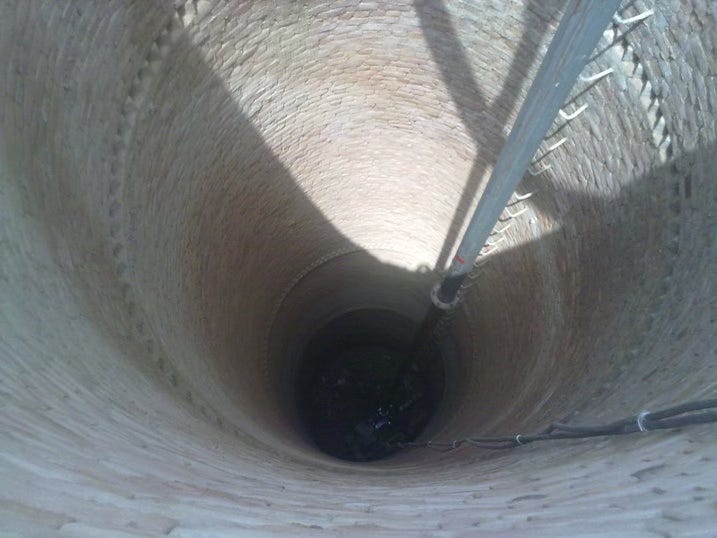
How do we know about the Earth’s structure, when the deepest hole we’ve ever dug was 12km?
I ask students to make a prediction but don’t tell them the answer. The ‘delayed closure’ approach. Instead, I just let the lesson unfold, because the answer’s there, inside all the activities we’re about to do.
Take the question about the Earth’s structure. I taught that lesson earlier today. It had all the makings of a curiosity disaster: I discovered five minutes in that the students had just found out about the Earth’s structure in geography.
But I had a secret weapon – delayed closure.
I told the students that the Soviets dug for 24 years. They drilled down further than anyone ever has. What percentage of the way to the centre of the Earth did they get?
Students guessed.
The answer? Precisely nowhere, given rounding errors.
If the Earth were an apple, they wouldn’t even have broken through the skin.
So if we’ve never made it through the Earth’s crust, how do we actually know anything about the Earth’s structure?
Somebody guessed X-rays. Not far off. We do use waves passing through the Earth – but these are naturally-generated. I told them about Danish seismologist Inge Lehmann, who discovered the inner core of the Earth in 1936 using earthquake data from New Zealand.
By then, they were as hooked as a class of 13-year-olds get. They raced through a comprehension activity in silence then came up with the most imaginative models of the Earth’s layers I’ve ever seen – a Big Mac, a watermelon, a gobstopper, a crème egg with a nut in the middle (the foil as the crust) – and explained these to the rest of the class.
But will they remember it?
I tested what they knew from their geography lesson at the start, and it wasn’t all that much. When I’ve tried the delayed-closure technique over the last couple of weeks, students retained more than they had done before.
So I’m hopeful. And I’ve got the science to back me up.
Seeing faces in MRI machines
In 2009, Min Jeong Kang and colleagues published a seminal neuroscientific study on curiosity. They put volunteers into an MRI machine and asked them trivia questions. When participants were curious, the reward pathways in the brain were activated. Participants remembered more answers to questions they’d been curious about than when they hadn’t.
In a 2014 paper, Matthias Gruber and colleagues went further. Between the trivia questions and the answers, participants were shown pictures of faces. When they were curious, participants remembered the irrelevant pictures better.
When we’re curious, our memories are activated, even for information that doesn’t seem relevant.
Gruber and his colleague Charan Ranganath argue that curiosity kicks in when we notice a gap between what we know and what we want to know. If the gap feels important or interesting, we’re motivated to fill it. During this process, the brain’s dopamine system ramps up, which strengthens memory formation in the hippocampus. We remember more because curiosity enhances our attention and desire to get the information we’re missing to close the knowledge gap.
Curiosity primes us to take in and retain information.
What’s really overloading students’ brains?
But I worried – if students are thinking about the question while you’re talking, aren’t they having to juggle a lot in their heads?
Then I thought – if they aren’t thinking about the big lesson question, what are they thinking about?
It doesn’t take much imagination to speculate: What’s going on at home. What their friend said to them in the playground. What they saw on TikTok when they used their phone at break when no one was looking.
Their mind goes to these things because that’s what they’re curious about. That’s what they want to know about.
The causes of the First World War, French grammar, fractions. Most students are not, by default, curious about these things. Certainly not in their abstract form. You introduce the lesson and their mind goes back to whatever they were thinking about on the way in. The cognitive load is whatever we’re adding – our voice competing with their thoughts. The fear they might be asked a question. The worry about how to complete a worksheet when they haven’t really been concentrating.
I’d got the problem the wrong way round.
The issue isn’t: does curiosity add to their cognitive load? It’s: how can we make them curious enough about our lesson so that their other worries and concerns fade into the background for an hour?
Sure, we can overload them with information if we don’t take proper care in our explanations, instructions and task design. That’s always been the case. But the neuroscience shows that curiosity improves retention. When students aren’t curious, they remember less than when they are.
If memory is the residue of thought, curiosity is the glue that helps those thoughts stick.
Freeing up some working memory
The working memory available to students isn’t fixed in practice. How they feel affects how much of their capacity they can actually use.
When students are calm, interested, or motivated, more of their working memory is available for learning. When they’re bored, anxious, or frustrated, some of that capacity gets tied up in managing those feelings instead.
This doesn’t mean lessons must be constantly fun – positive affect is more about comfort, emotional safety, and of course curiosity, than entertainment. The trick is directing the curiosity to the lesson material.
That’s where the thought and planning come in.
Luckily, the literature on curiosity gives us hints, and we can draw on studies from neuroscience, cognitive psychology and education. Piecing them together gives us clues about what might work in the classroom.
But more on that another day.
Once we’ve got the ‘why’, the ‘how’ becomes a lot easier. We can’t promise we’ll make our students multimillionaires (although doing better in exams can’t hurt). But we can give them a reason to listen.
Big fan of this idea from Nietzsche, thanks for this. Hadn't thought to connect it to children's working memory before though. A better understanding of the purpose of each learning activity would definitely support intrinsic motivation in the classroom